Table of Contents
-
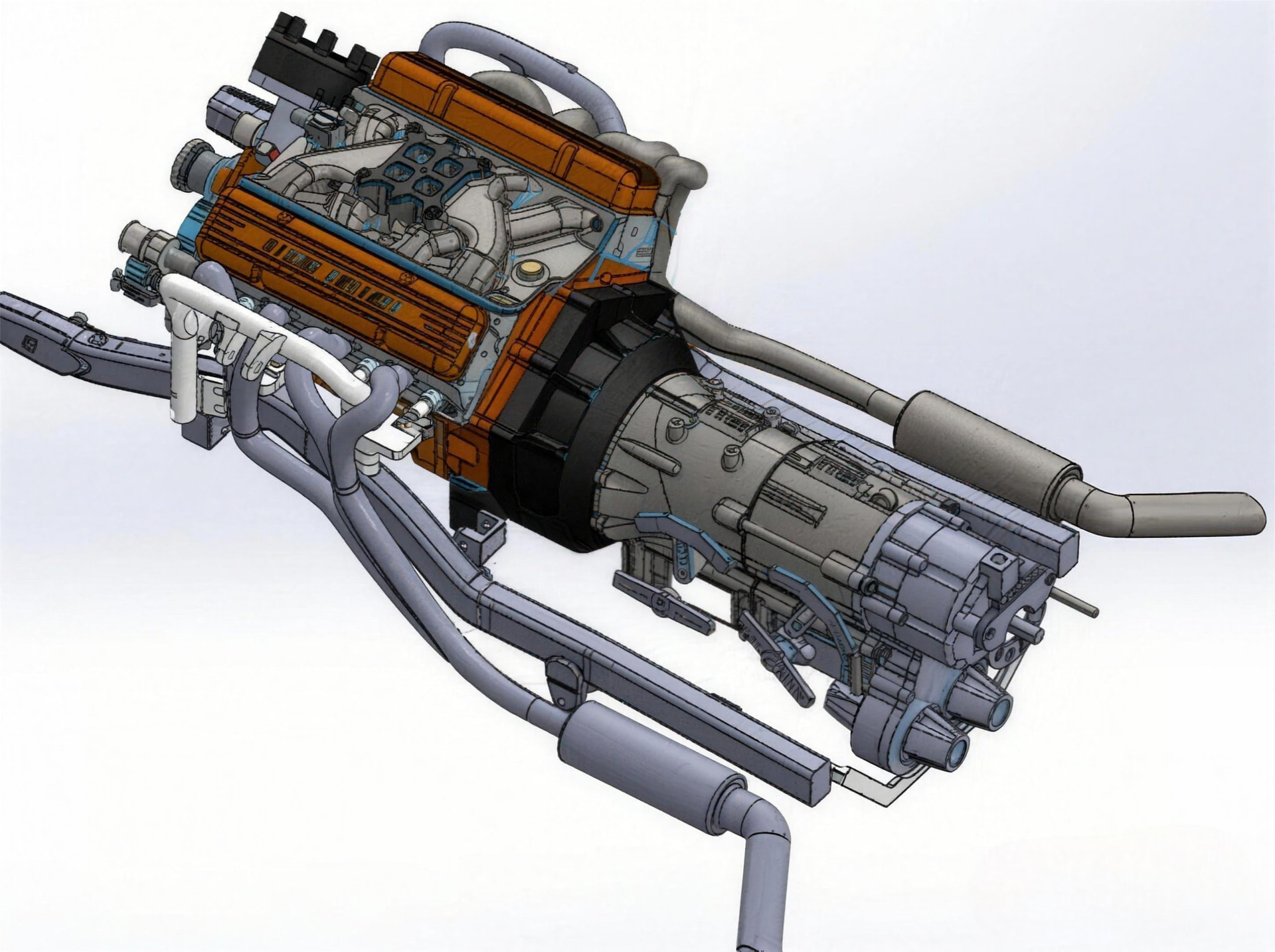
What Is the Cison V8 Engine
-
Why Is the Cison V8 Highly Rated
-
Can the Cison V8 Actually Run
-
What Are the Main Advantages of the Cison V8 Kit
-
How Much Power Does the Cison V8 Make
-
How Efficient Is the Cison V8
-
Can Nitromethane Be Added to Increase Power
-
Can the Model Exceed the Gearbox Speed Limit
-
What Spark Plug Thread Size Does It Use
-
What Is the Correct Valve Clearance
-
Can You Assemble the Engine Yourself
-
What Are the Most Common Assembly Problems
-
Does the Engine Include a Carburetor and Ignition System
-
Does the OHV Version Include an Alternator
-
Is There a Bolt-On Exhaust Extension or Muffler
-
Can a Flathead Intake Manifold Be Used on the OHV Engine
-
How Does the Lubrication System Work
-
What Is the Recommended Break-In Procedure
-
Is It Normal for the Cylinder Sleeves or Pistons to Feel Tight
-
Can the Cison V8 Be Used in a Boat
-
Is an Engine Mount Included
-
Do You Need to Set Ignition Timing After Assembly
-
Why Is the Cison Engine Expensive
-
Is a Supercharger Planned for the Cison V8
-
Will Future Upgrades Be Available
-
Where Can Spare Parts Be Purchased
-
Can the Cison V8 Power Different RC Models
-
How Much Torque and Mechanical Output Does It Have
-
Is Technical Support Available
-
How Should the Cison OHV V8 Be Tuned Properly
1. What Is the Cison V8 Engine
The Cison V8 is a 1:6 scale, fully functional, all-metal model engine that closely reproduces the mechanical structure of a real V8 engine. It includes moving pistons, a rotating crankshaft, working valves, and a functioning distributor system. It is designed for hobbyists, educators, and collectors, and can be used for hands-on assembly, engine-principle demonstrations, and as a power source for small RC vehicles or mechanical projects. Unlike toy engines, it runs on real gasoline and uses an independent lubrication system, giving it a much more authentic operating experience.

2. Why Is the Cison V8 Highly Rated
The Cison V8 is highly regarded for several reasons.
First, it is precision-engineered. Its parts are machined to tight tolerances so that the pistons, crankshaft, and valves move smoothly and consistently.
Second, it is durable. The all-metal construction allows it to withstand repeated running if it is assembled correctly and maintained properly.
Third, it has real functional power. Even though it is miniature in size, it can still power RC cars, boats, trucks, and other small-scale mechanical applications.
Fourth, it has educational value. It is especially useful for understanding four-stroke engine operation, V8 dynamics, and mechanical logic.
Finally, it has strong display and collector value because of its detailed, limited-production, mechanical-sculpture appeal.
3. Can the Cison V8 Actually Run
Yes. The Cison V8 is fully operational. It uses real gasoline and an independent lubrication system, and its moving parts, including pistons, valves, and crankshaft, function in the same way as those in a real V8 engine. That makes it suitable for classroom or workshop demonstrations, RC vehicle or boat power systems with the correct gearing, and hands-on tuning experiments involving ignition timing and mechanical adjustment. Proper assembly, lubrication, and break-in are essential if you want long-term stable operation.

4. What Are the Main Advantages of the Cison V8 Kit
The kit offers several distinct advantages.
It provides true hands-on learning because users assemble the engine themselves and directly understand the relationship between pistons, valves, camshaft, and crankshaft. It offers real functional output, using gasoline and 10W50/60 4T oil with independent lubrication, so it can power RC vehicles, small boats, or custom mechanical projects. It also has strong educational and research value, especially for higher-level learning around internal combustion engines, thermodynamics, and mechanical systems. The precision-machined metal parts provide realistic motion and durability. In addition, the assembly process itself develops patience, accuracy, and mechanical intuition, while the finished engine also has strong collectible and display value.

5. How Much Power Does the Cison V8 Make
The Cison V8 has a displacement of 44cc and produces approximately 3 to 4 horsepower. While that is obviously far less than a full-size automotive engine, it is sufficient for miniature applications such as RC cars, boats, trucks, and other compact mechanical builds. Actual output in practice depends heavily on vehicle weight, gearing, and load.
6. How Efficient Is the Cison V8
Because the engine is so small, fuel consumption is naturally low. It runs on 92-octane gasoline or higher, but “fuel efficiency” here should not be understood in the same way it is for a full-size car. The point is not miles per gallon, but reliable operation, smooth motion, and educational realism. In that sense, its efficiency is tied more to proper tuning and stable running than to automotive-style fuel-economy metrics.
7. Can Nitromethane Be Added to Increase Power
No. Nitromethane or similar additives should not be used in this engine. The Cison V8 is designed specifically for gasoline. Adding nitromethane will raise combustion pressure and can damage precision parts such as pistons, cylinder walls, valves, and related components. If more performance is desired, it is safer and more effective to optimize the gear ratio, reduce vehicle weight, or improve mechanical efficiency rather than changing the fuel chemistry.
8. Can the Model Exceed the Gearbox Speed Limit
The included gearbox is designed for small RC and mechanical projects and typically supports speeds around 18 mph. Reaching higher speeds such as 30–40 mph would require careful modification, including custom gearbox or pulley ratios, a lighter chassis, and excellent lubrication and maintenance. Poorly planned speed upgrades can lead to overheating, premature wear, or mechanical failure, so any attempt to exceed the normal limit must be engineered carefully.
9. What Spark Plug Thread Size Does It Use
The Cison V8 uses a small spark plug with a 3/16-40 imperial thread. It can be purchased separately. Using the correct plug size is important for proper ignition performance and for avoiding thread damage to the cylinder head or damage to the distributor system.
10. What Is the Correct Valve Clearance
Both intake and exhaust valve clearance should be set to 0.1 mm. Accurate valve clearance helps ensure smooth piston movement, proper combustion, and reduced wear on the valves and camshaft. During assembly, the clearance should be measured carefully with a feeler gauge and set according to the manual.
11. Can You Assemble the Engine Yourself
Yes. If you purchase the complete Cison V8 kit, you can assemble the engine yourself. The kit includes machined metal parts, pistons, crankshaft, valves, carburetor, CDI ignition, and distributor. Assembly requires patience, careful reading of the instructions, and close attention to detail. The purpose is not just to reach the final result, but to build mechanical understanding, precision, and troubleshooting ability during the process. The parts are pre-machined; you are not fabricating components from raw materials, but you are responsible for building the complete engine correctly.

12. What Are the Most Common Assembly Problems
Most common issues are caused by assembly rather than by defects.
Piston rings may feel tight or stick early on, but careful lubrication and installation usually solve that. Crankshaft and cylinder alignment require extra attention, and all components should be fully seated and aligned before tightening. Lubrication is essential, especially during break-in. Small components such as screws, washers, and pins are easy to lose and can also be damaged by overtightening. This is one of the most important reasons why builders should work slowly and methodically.
13. Does the Engine Include a Carburetor and Ignition System
Yes. The engine includes a carburetor, CDI ignition unit, and distributor. However, the spark plug and some additional ignition-related accessories may need to be purchased separately. This arrangement gives users full control over timing setup and tuning.
14. Does the OHV Version Include an Alternator
No. The alternator for the OHV version is sold separately, and it is different from the alternator used on the Cison inline-four engine. It can be added for educational demonstrations or small functional displays, such as powering tiny lights in a model setup.
15. Is There a Bolt-On Exhaust Extension or Muffler
At present, exhaust and muffler parts are mostly custom-made or hand-fabricated. A small-batch production version may be offered in the future, but for now, many hobbyists fabricate their own extensions or modifications based on available parts.
16. Can a Flathead Intake Manifold Be Used on the OHV Engine
No. A flathead intake manifold is not compatible with the OHV engine. To ensure proper airflow and carburetor function, only an intake manifold designed specifically for the OHV configuration should be used.
17. How Does the Lubrication System Work
The engine uses a small internal oil pump to lubricate the moving parts. The kit includes instructions and reference material for installation and setup. Proper lubrication is one of the most important conditions for stable running and long service life, especially because the engine is compact, highly machined, and sensitive to friction-related wear.
18. What Is the Recommended Break-In Procedure
For smooth running, the recommended break-in procedure is to run the engine at a fixed idle using about 1 liter of gasoline together with 10W50/60 4T oil in the independent lubrication system. This allows the pistons, piston rings, and other moving parts to seat properly. After the initial break-in period, the oil should be changed. After that, distributor timing can be fine-tuned for smoother idle or a more balanced engine rhythm. This process is essential for good long-term reliability and performance.
19. Is It Normal for the Cylinder Sleeves or Pistons to Feel Tight
Yes. Because the engine is precision-machined, a slight tight feel is normal. Lubrication should be applied carefully during assembly. If the connecting-rod clearance feels too tight, the screws can be loosened slightly to allow free movement, then tightened gradually while checking starter rotation. However, screws should not be loosened excessively, or they may back out or allow components to collide.
20. Can the Cison V8 Be Used in a Boat
Yes. A dedicated gearbox and marine clutch kit for the Cison V8 is under development. Once available, these should make forward and reverse operation in a model boat more practical and smoother.
21. Is an Engine Mount Included
No. The engine mount or engine stand must be purchased separately. The starter kit includes the CDI ignition and distributor, which are necessary for the engine to run, but it does not include the engine mounting hardware.
22. Do You Need to Set Ignition Timing After Assembly
Yes. The engine is supplied as a kit with multiple separate parts, and ignition timing is not pre-set. After assembly, timing must be set according to the instructions. Typically, that means rotating the crankshaft to top dead center for cylinder #1, then adjusting the ignition system so the spark occurs at the correct point in the cycle. The included instructions provide step-by-step diagrams. Once timing is set correctly, the engine should run smoothly and display realistic V8 motion.

23. Why Is the Cison Engine Expensive
There are several reasons. All moving components are precision-machined. The engine is fully functional, not static. Production is done in relatively small quantities, which increases manufacturing cost and collector value. It also has educational and research applications, and it is built for repeated use rather than one-time novelty. All of that contributes to its price.
24. Is a Supercharger Planned for the Cison V8
At present, no. The engine is designed around standard OHV operation. A supercharger may be considered in the future, but for now, performance optimization is focused on gear ratio, load management, and proper break-in rather than forced induction.
25. Will Future Upgrades Be Available
Possibly. Some small-batch or custom upgrade options may be released in the future. Users are encouraged to check the Vortrixe upgrade section or contact support for the latest information.
26. Where Can Spare Parts Be Purchased
Most Cison V8 parts can be purchased separately through Vortrixe. For special parts such as spark plugs, ignition accessories, or custom mounts, customer service is the best contact point.
27. Can the Cison V8 Power Different RC Models
Yes. It can be used to power small RC cars, boats, and trucks. Proper gear ratios and a lightweight chassis are important to improve performance and prevent overloading the engine.
28. How Much Torque and Mechanical Output Does It Have
The 44cc V8 produces around 3–4 horsepower, with torque sufficient for model-scale applications. Actual torque output depends on load, vehicle weight, and gearing. The most effective way to maximize usable output is by adjusting the transmission ratio and reducing vehicle weight where possible.
29. Is Technical Support Available
Yes. Vortrixe provides downloadable manuals, instructional videos covering lubrication, break-in, and tuning, and customer support for parts, assembly, and troubleshooting. This is especially important because the engine is a true kit and does reward careful setup and informed adjustment.
Final Thoughts
The Cison V8 is not just a product. It is a mechanical learning system, a precision engine kit, and a project that rewards patience. Most problems users encounter are not manufacturing defects, but assembly errors, tuning mistakes, or incomplete understanding. That is actually part of the value: once you understand the engine, it runs better, lasts longer, and becomes much more satisfying to own and use.