 FS-L200 Twin Cylinder Engine – Common Questions & Answers
Hey everyone,
We’ve been getting quite a few similar questions about the FS-L200 twin-cylinder engine, so I figured I’d put together a quick Q&A.
Some of these might look basic, but trust me — these are exactly the things that can stop an engine from running.
 Q1: My wiring harness doesn’t have a ground wire. Do I need one?
 Good question.
A:
-
If you’re using the nitro version, then yes — a ground wire is required.
-
If you’re using the gasoline version, then no — you don’t need it.
So if it’s gasoline: relax, nothing is missing.
Q2: There are no holes on the base plate for the fuel tank. Should I drill them?
Short answer: yes, if needed.
A:
The base plate is usually designed with mounting positions, but depending on the version or your setup:
You can absolutely drill your own holes.
It’s a simple job — and honestly, part of the “DIY spirit” of this engine.
Q3: Does the spark plug wire connection order matter?
This confuses a lot of people.
A:
No — it does NOT matter.
This is a twin-cylinder engine, so:
Either wire can go to either spark plug.
Same applies to both nitro and gasoline versions.
Q4: Can I use gasoline mixed with engine oil at 30:1?
Yes, and you’re on the right track.
A:
You can use 95# or 98# gasoline mixed with engine oil at 30:1.
Important reason:
This engine does NOT have a separate lubrication system.
So:
 The oil in the fuel = your engine’s lifeline
Q5: The engine starts briefly but dies when fuel is connected
This is one of the most common issues.
 Root Cause:
The mixture is too rich (too much fuel) → causing flooding
In simple terms:
There’s so much fuel that the spark gets “overwhelmed”
 Important Note:
There is NO fixed perfect air-fuel setting.
It depends on:
-
temperature (colder = needs more fuel)
-
fuel type
-
environment / air pressure
So:
The manual is just a starting point, not the final answer
Understanding the Needles
There are two adjustments on your carburetor:
Main Needle
Controls the overall fuel flow (large adjustments)
Auxiliary Needle
Used for fine tuning (small adjustments)
Adjustment logic:
-
Turn IN → less fuel (lean)
-
Turn OUT → more fuel (rich)
 What You Should Do:
For now, focus ONLY on the main needle:
-
Turn the main needle clockwise 1/4 turn (reduce fuel)
-
Try starting the engine
-
If still too rich → turn another 1/4 turn
Repeat until it runs smoothly

- At this stage:
 Do NOT adjust the auxiliary needle yet

Easy way to think about it:
Too much fuel = engine is “flooded”
Too little fuel = engine is “starving”
 One Important Tip:
Be patient
Make small adjustments (1/8–1/4 turn each time)
And honestly:
This tuning process is one of the most fun parts of the engine
It’s a bit like “learning how to tame the machine” 
Q6: How should I position the Hall sensor?(Gasoline version)
This one is VERY important.
A:
The Hall sensor must be:
-
Aligned directly with the flywheel magnet
-
Installed at a parallel angle (not vertical)
-
Positioned very close to the magnet
If it’s misaligned:
The engine won’t detect timing correctly → no spark

 Bonus tip:
If everything looks correct but still no spark:
It might be CDI
BUT:
90% of the time it’s just Hall sensor alignment
Final Thought
Most engines don’t fail.
They just need a bit of adjustment.
If you’re stuck:
Share a video — happy to help 
Q6: The con rod screws broke after 2 seconds of running. How can I prevent this?
Hey — thanks for sharing this, and I’m really glad you stopped the engine right away.
Let’s break this down.

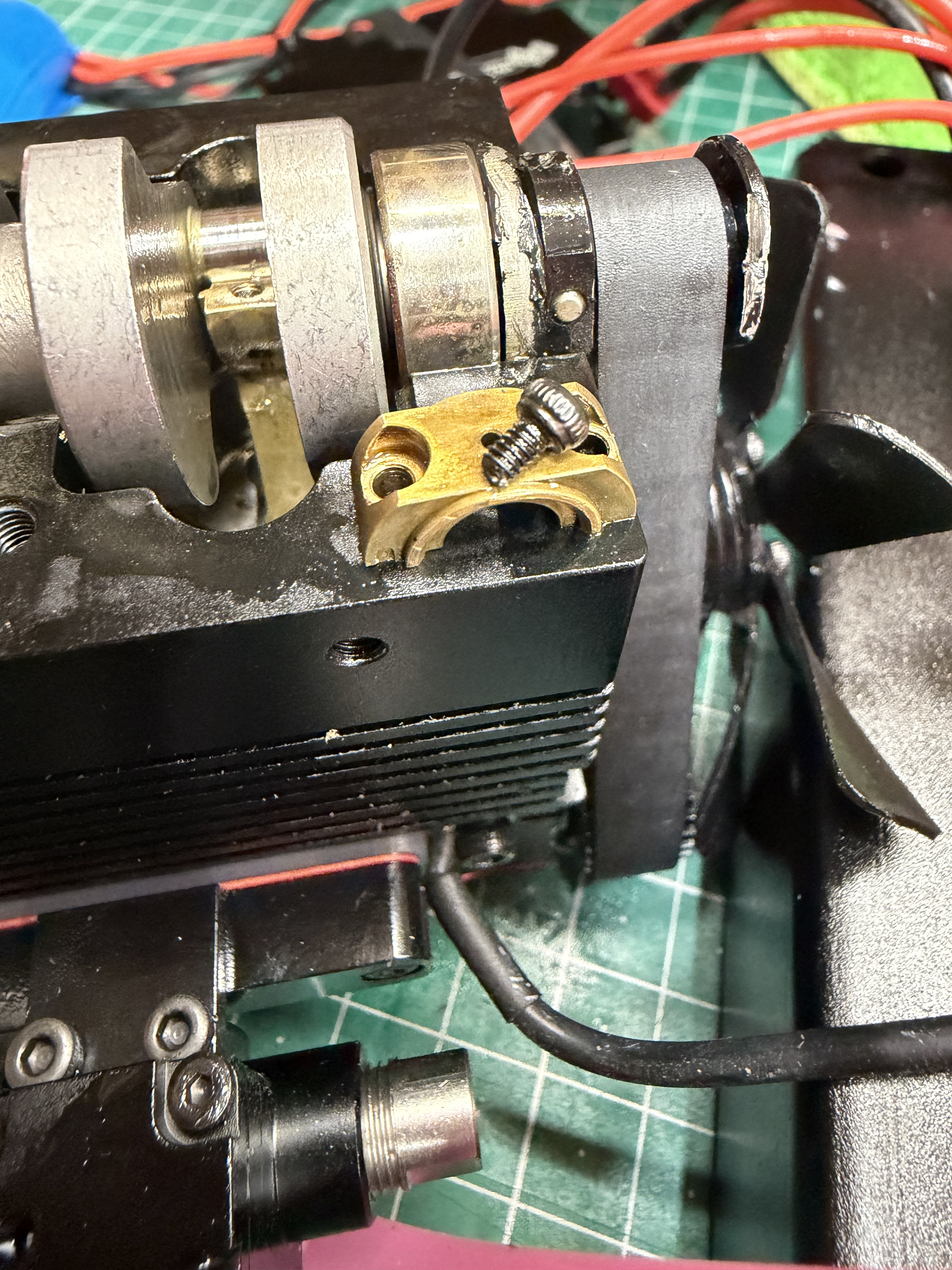
What likely happened?
In most cases, this is not random — You have to realize, this is a beast that revs up to 14,000 RPM.it usually comes from one of these factors:
 Screws were not fully secured
During assembly, the con rod screws must be:
properly tightened
evenly aligned
If they are slightly loose:
vibration + engine load = they will fail very quickly
 No thread locking (very important)
These engines generate:
vibration
repeated impact forces
Without thread locker:
screws can loosen within seconds
 Sudden load at startup
If the engine:
-
receives too much fuel
-
or starts at high RPM immediately
it creates a sudden shock load on the con rod
this can snap small screws instantly
How to prevent it
Here’s what we strongly recommend:
 Use thread locker
Apply a small amount of thread locking glue on the con rod screws
This is extremely important for high-speed parts
Tighten properly (but not over-tight)
-
tighten firmly
-
avoid stripping threads
think “secure, not forced”
Start gently
-
avoid full throttle startup
-
let the engine run at low speed first
give it a “warm-up phase”
Check alignment
Make sure:
-
con rod is straight
-
no binding or resistance
Engineer’s tip
Small engines = small tolerances
Even a slightly loose screw can become a big problem very quickly.
Final thought
This is actually a very typical “early-stage setup issue”
Once properly secured, the engine will run reliably
If you’d like, feel free to share a photo or video of your setup — happy to help you double-check